

5 Tips to Sneak Veggies into your Teen’s Meals
5 Tips to Sneak Veggies into your Teen’s Meals By Tanishq Desai We all know that it can be a very tough task to have your teens finish their greens, but did you know that research suggests it takes 10 to 15 years for a young adult’s taste buds to get fully acquired with a new flavour? This is why we are bringing you five tips to sneak veggies into your teen’s meals. The first step is befriending a food processor! We’re all aware that the first sighting of anything that resembles a vegetable instantly sets your teenager into code red. But instead of serving diced-up veggies, you could be popping them into a food processor and sneaking them into tasty recipes that your teenager would never notice! Here’s how: Sneaky Tip #1 Mac and Cheese with Sweet Potato and Peas We have one advantage because we know our kids’ favourite choice of meals, and some good ol’ Mac and Cheese always tops this list. Boil up some sweet potato until it’s tender for 15 minutes and add it to the blender to make it into a fine puree that can be mixed well with the cheese sauce. You can choose to add the peas to the sauce and season it with salt and pepper before adding your macaroni. And voila! A healthy(ier) mac and cheese! Sneaky Tip # 2 Zucchini Pizza Crust Did you gasp? Relax. We know it can sound pretty scary, but there are a lot of other healthy options to change up your teen’s pizza addiction. This Zucchini Pizza Crust recipe will take only 30 minutes and could be a great way for your teen to get their veggies in! All you’ll need is almond flour, zucchini, eggs, spices and your choice of toppings. Now, this won’t be your usual carb dripping-in-grease-kind-of pizza. The Zucchini Pizza Crust is super healthy, gluten-free and an amazing substitute for unhealthy takeout pizzas. Follow the recipe here: Delicious Zucchini Pizza Crust Recipe. Sneaky Tip #3 Ground Beef and Veggie Pasta The next time you cook up this beautiful Italian delicacy for your teen, reduce the amount of ground beef and add some finely chopped mushrooms to your sloppy joes or your meat-based pasta sauce. The meaty texture of the mushrooms absorbs the sauce making it the perfect veggie to mix into your pasta. Our favourite Mocktails will be a good pair with the pasta! Sneaky Tip #4 Meatballs à la Veggie Meatballs are the best and the

5 Tips to Improve Bedtime Routine for Teens
5 Tips to Improve Bedtime Routine for Teens By INBETWEEN Magazine When bedtime rolls around, our bodies and minds are often tired from the long day. However, this doesn’t always translate into a good night's rest. Especially for teenagers who are still developing, it’s important to implement a healthy routine at night to set them up for a positive, focused day. Here are 5 effective tips to improve bedtime routine that will get your teen to sleep better.1. Take a Relaxing Bath or Shower While some teens prefer a morning shower to wake up, researchers have found that bathing in warm water at night helps them sleep better. By heating your body up an hour and a half before bedtime, you are allowing your mind to relax while your body adjusts to the ideal sleep temperature. Encourage your teen to take a shower in the early evening to see if this gives them a sounder sleep.2. Reduce Screen Time It’s no secret that late-night screen time poses significant problems when trying to fall asleep. The blue light emitted from digital screens pushes our internal clock back and keeps us awake longer. For some, the solution would be to put their devices down 1-2 hours before bedtime. However, this may not be practical for everyone; especially teenagers, who spend an estimated 9 hours on their screens each day. A more feasible solution is looking into a pair of glasses with blue light protection, which serves to block the blue light rays and keep our internal clocks regulated. Not only can these be helpful at night, but wearing them throughout the day can reduce eye dryness and headaches. For a tech-savvy teen, these may be worth looking into. 3. Avoid Excess Liquid Too much liquid before bedtime can cause frequent interruptions that keep you from a deep sleep. Repeated urination in the middle of the night is known as nocturia, which in most cases is preventable. In the hours leading up to bedtime, try to limit your teens' food consumption, as it increases water intake. The more water they drink before falling asleep, the higher the chances they will get up in the middle of the night. Stopping eating at a reasonable time and consuming only the necessary amount of water, can aid in a sounder, uninterrupted sleep.4. Create a Comfortable Sleep Environment Comfort can come from many factors including lighting, bedding, and temperature. The light turns our brain
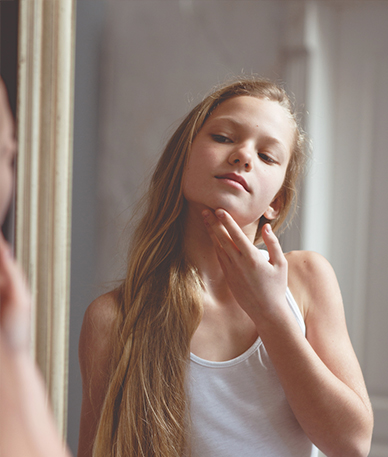
3 Ways To Talk To Your Teen About Skin Health
Adolescent Acne: 3 Ways To Talk to Your Teen About Skin HealthTeen health is a tough topic that every parent will have to address at one point or another. From sex education to bodily changes, and hormones, talking to your teen about personal health and wellness is paramount. One personal hygiene topic at the forefront of many teens’ and parents’ minds is acne. No teen wants to deal with dreaded breakouts, pimples or skin imperfections, but countless do. If your teen is dealing with acne, it is important for you to do your best to offer support. In order to get that conversation started, here are three ways to better support and talk to your teen to address acne and the importance of skin health.Remind Them They are Not Alone Your teen may feel that they stick out or feel a sense of isolation due to their acne. It is your job to help remind them that they are not alone. Perhaps you yourself had to deal with acne as a teen or have friends whose teens are going through the same thing. Remind your teen that acne is very common and many face a breakout here or there. To help support your child, you can have them connect with other teens who have acne and ask them what tips they have and what is working for them. Your teen will value that they have someone their own age to get advice from. In addition, they can look for inspiration from skin-positive influencers as a positive way to leverage social media, and connect with others that can relate.Help With Stress Management Stress can play a role in teen acne. In a study concerning acne and stress, researchers found teenagers who were under high levels of stress were 23% more likely to have increased acne severity. This is why it is so important to help your teen with stress management. Teens are under a lot of pressure, from school to friends, extracurricular activities and coping with the pandemic. All of this combined can be very overwhelming. Recognizing the signs of stress and managing it can make a big difference in skin health. Have your teen determine ways that can help them when they are under increased stress. Some strategies can be deep breathing, mindfulness or meditation.Encourage A Skin Care Regimen Assist your teen in developing a dedicated skin care routine that can help to

5 Ways to Get Your Teen More Active This Summer
5 Ways To Get Your Teen More Active This SummerIt may be called the lazy days of summer, but Health Canada recommends that teens engage in at least 60 minutes of exercise daily. Not only does regular physical activity help maintain good health but it’s a great way to boost body image and confidence. While the end of the school year signals the end of gym classes and school sports, it doesn’t have to mean that physical activity comes to a stop. To keep your teen active all summer, here are five ways to encourage them to keep moving. By Rhiannon NessSign them up at Planet Fitness. The gym is offering teens aged 15-18 the chance to work out for freeat one of its 30+ locations across Canada until September as a part of its Teen Summer Challenge. They will be offering fitness classes with a certified trainer that are designed specifically for teenagers once a day, Monday through Friday. The gym is also sharing an important message about body positivity. “Planet Fitness is a judgement-free zone,” says Becky Zirlen, senior public relations manager at Planet Fitness. “So, this is the perfect opportunity for teens to try a gym!” Try cycling! Cycling is a great way to stay active, and it could be an important way of bonding with your teen. On top of that, it is a way that could keep the whole family active! In 2018, ParticipACTION released its Report Card on Physical Activity for Children and Youth and found that only 35 per cent of Canadian kids and teens aged 5-17 are meeting the national physical activity guidelines of 60 minutes of heart-pumping physical activity per day. Get the whole family on their bikes after dinner for an early evening ride! Enroll them in sports camp! Many community centres and schools like UCC Summer Camps and Camp UofT offer themed sports and fitness camps for teens. These camps are a great way to stay active while also giving them the opportunity to meet other teens with the same interest in sports and fitness. Find a program in your area—check schools, parks, community centres—for the perfect fit for your teen! Have fun. Encourage your teen to try different things until they find something they love that doesn’t feel like work. Toronto-based personal training specialist Leo Stafford suggests “that people do whatever grabs their attention.” This could be a sport that they

Teen Mood Swings: 3 Tips to Manage Them
Teen Mood Swings: 3 Tips to Manage Them by Dr. Yanina Is your tween or teen experiencing the symptoms of what I call the ‘Emotional Armageddon Syndrome' or EAS? Let me give you an example of how EAS might look like. This is a real story. Picture my 13-year-old daughter bombarding me with hugs, telling me how much she loves me. A split of a millisecond later, her smile magically transforms into the meanest frown simply because I said: “Honey, don’t forget to clean your room before you go to bed.” Does this sound familiar? The truth is most kids become a different child when they reach the tween or teen years. As they enter the pre-adolescent years, they begin to experience physical, emotional and social changes. Frankly, many have a hard time facing their puberty and don’t know what to do with it. If you remember, our bodies were totally wacked and out of control when we became teens. Between the menstrual cycle, wild hormones, physical development, voice cracking, new desires and curiosity, puberty can be quite challenging. Then, you have the teenager who tends to over-react as her world is seemingly crashing down. “I hate school. All my teachers hate me. No one wants to be my friend. Everyone is trashing me on social media. My life is a disaster!” Maybe you’re noticing these unpredictable and intense teen mood swings yet finding yourself unprepared to deal with these changes properly. The good news is that, according to research, mood swings during adolescence are actually normal, aren’t necessarily a reason to worry and they shall pass. I wonder if these researchers have tweens and teens at home? Anyhow, the key here is to help you and your tween/teen manage these swings in a healthier way. In this post, I’m sharing three tips to help you guide and support your child during this intense journey so that they learn to face mood swings in a healthier way while keeping your sanity along the way. Does this sound like a plan? All right, let’s get started! Tip 1. Stay Calm One thing that worked well for our 17-year-old son and seems to be working well for our 13-year-old daughter is focusing on how we’re going to react to their mood swings before we correct the behaviour. An effective way to address teen mood swings is to remain calm, in control and exercise patience as you interact with your moody tween or teen. In other words,

4 Ways To Help Your Teen Get Enough Sleep
4 Ways To Help Your Teen Get Enough SleepEven though the kids are back in school, it can still be hard for them to get into a proper sleep routine. After a summer of late nights, a lot of teens may have gotten used to sleeping in and are now finding it difficult to wake up for school so early in the morning. Though this may seem like rebellious behaviour, there is an actual scientific reason behind this.Sleep Phase Delay Sleeping patterns for teenagers are hormonally influenced because the hormonal response to the 24-hour light/dark exposure that influences circadian rhythm (an internal 24-hour clock running in the background of your brain that cycles between alertness and sleepiness) is altered. Adolescents then proceed to physiologically want to stay awake later at night and remain sleeping late in the daytime. The scientific reason behind changing sleep patterns is called Sleep Phase Delay. It means that a child that used to fall asleep at 9 p.m. doesn’t start to feel tired until 10:30 or 11 p.m. Sleep expert Amy Marasco from Goodnight Sleep Site (a service committed to helping families get better sleep) says that adolescents show higher levels of alertness at 8 p.m. than most adults, and even more so at 10 p.m. “Further investigation revealed that the adolescent body’s release of the sleep-inducing hormone melatonin is delayed during the sleep phase delay portion of adolescence, making it harder for teens to fall asleep on their own,” says Marasco.Sleepiness a Serious Threat A technical report done by The American Academy of Paediatrics talks about how chronic sleep loss is a serious threat to teenagers that can contribute to obesity, mental health issues and drowsy driving. The report revealed that as students get older, sleep durations decline. Students in America, Germany, Northern Taiwan, and India dropped to less than eight hours of sleep for high-school aged students; so, it isn’t just a problem within North America.How Many Hours Should Your Teen Be Sleeping? Sleep is important to growing teens as appropriate sleep is required in order for their bodies and minds to function at their best.“The recommended amount of sleep for a teen is 9 ¼ hours which is much more sleep than the average 7-7 ¼ hours teens are currently getting,” says Marasco. Getting a proper amount of sleep will also help them fight off illness and keep up with academics, part-time jobs and family obligations.4

Depressed and Dying
Depressed and DyingTeen suicide is rising at alarming rates. In fact, according to a recent survey, 13.6 per cent of surveyed high school students in the US and a whopping 46 per cent of surveyed high school students in Canada have created a plan to die. Here’s how to spot the signs of depression and suicidal thoughts in your teens, so you can get them help before it’s too late. By Dr. Allison Forti Every day, we turn on the news or log on to our social media and see stories of teen suicide. Our children are killing themselves more and more every day. Suicide is now the second leading cause of death for young people ages 10-24. In fact, according to the Centers for Disease Control and Prevention, rates of teen suicide have steadily risen in the U.S. since 2007 from 9.7 deaths per 100,000 to 13.15 deaths per 100,000 for ages 15-24. This alarming trend also reveals increases in suicidal ideation and behaviour. According to the latest Youth Risk Behaviour Survey, which is conducted every two years during the spring semester and provides data representative of Grade 9 through Grade 12 students in public and private schools throughout the United States, 31.5 per cent of high school students reported persistent feelings of sadness and hopelessness daily for two or more weeks over the past year. The same survey revealed 17.2 per cent of high school students have considered suicide, 13.6 per cent have created a plan for suicide, and 2.4 per cent have actually injured themselves in suicide attempts. In Canada, our teens are faring no better. Kids Help Phone surveyed 1,319 teens aged 13 to 18 across the country. The finding were published in a report called “Teens Talk 2016,” and included this alarming statistic — 22 per cent of those who responded, seriously considered attempting suicide in the last 12 months. Moreover, 46 per cent had formulated a plan with girls (67 per cent) being twice as likely as boys (33 per cent) to consider taking their own lives. Being aware of the signs of suicidal ideation may help parents protect their teens. Teens most at risk for suicide are those with a past history of substance abuse and mental illness (e.g., depression). If you think your teen might be depressed, it’s important to get him or her the help she or he needs. Here are eight signs to look


